Pixma Tr7020 Tr7020A Honest Review — Is the Hype Justified?
I've been using a Canon PIXMA TR7020 (the TR7020A is the closely related variant) as my primary home office printer for several months. I bought it because I wanted a compact all-in-one that could handle occasional photo prints, everyday documents, and the odd multi-page scan without taking over my desk. What I found was a machine that hits a lot of useful notes for light-to-moderate home use, but also one with a few trade-offs that matter depending on how you print. Below I walk through my real-world experience — setup, daily printing, scanning, connectivity, running costs, and where this printer shines or falls short.
Introduction — My use case and expectations
To be upfront: my printing needs are mixed. I print a handful of black-and-white letters and invoices each week, a few color pages and photos for family albums, and I scan multi-page documents periodically. I wanted a small footprint, Wi‑Fi reliability, and a scanner good enough for receipts and occasional documents. The TR7020 appealed because it promised a compact design and versatile features at an attractive price. After living with it for months, I can say it mostly delivered, but not without annoyances I didn't expect.
First impressions and setup
Out of the box the TR7020 is compact and feels light compared with many multi-function printers. The unboxing was straightforward — the unit was well-packed, and the included quick-start guide is serviceable. Setup over Wi‑Fi took me about 10–15 minutes from plugging the unit in to printing from my laptop and phone. I used the Canon mobile app for Wi‑Fi setup; the app walked me through connecting the printer to my network and then adding the printer to my phone. There were a couple of moments where the app lost connection during setup, but reconnecting the printer from the touchscreen and retrying resolved it.
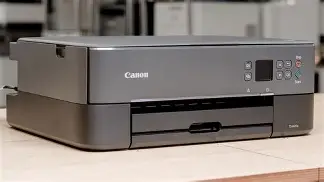
One thing I appreciated immediately was the footprint: it fits neatly on a narrow shelf beside my desk and the paper tray tucks in so the printer doesn't look bulky. The control panel is small and simple — not a full-size touchscreen — which keeps the design minimal but also limits on-device configuration options.
Daily use — printing experience
Print quality
For plain text documents, the TR7020 produced clean, dark text that looked professional enough for invoices and letters. I was consistently pleased with document quality — fonts are crisp and margins are even. Color prints and basic photos looked nice for casual use: vibrant colors, decent saturation, and acceptable shadow detail for snapshots. I printed holiday photos on glossy paper and the results were good for framing in photo albums or sharing digitally, but they didn't match what I used to expect from dedicated photo labs. The gradations in very dark areas can look a touch compressed on 4x6 prints; if you want flawless gallery-quality photos, this isn't the right category of printer.
One specific quirk I noticed: borderless photo prints occasionally showed a very faint banding on extreme close inspection. It wasn't obvious from a typical viewing distance, but if you're picky, you might notice it. For everyday family photos and color flyers, though, it wasn't a deal-breaker.
Speed and reliability
Speed is respectable for its class. Black-and-white pages come out quickly, and simple color pages are acceptably fast. Duplex printing (automatic two-sided) works reliably but slows the job down, which is expected. I occasionally printed multi-page documents and the printer handled duplex without paper misfeeds in most cases. That said, when printing a mix of heavier card stock for labels and regular paper, I had to watch the paper selection; using the wrong paper type in the driver resulted in slight misfeeds once or twice.
Reliability has been mostly solid. I experienced one paper jam in several months — the printer cleared it without damage and with minimal fuss. On the other hand, larger multi-page tasks (think long double-sided print jobs) highlighted that this is still a light-duty device; it’s not meant to run continuously like an office laser printer.
Scanning and copying
The scanner is competent. I scanned receipts, multi-page contracts and a couple of photos. For documents, the auto-feed and image correction did a good job: text was legible, OCR-ready, and scans were fairly true to the original. The automatic document feeder (ADF) handled multiple pages without much fuss, though it prefers papers that aren’t too curled or glossy.
Photo scanning is acceptable for casual archiving — colors are reasonable and detail is fine for non-professional use. I wouldn’t use this to digitize an entire photo archive where archival quality matters, but for household scanning it gets the job done.
Discover deals on Electronics — updated daily.
View Offers →Design, build, and noise
Design-wise, I liked the compactness and small footprint. It doesn't dominate my desk space. The build feels mostly plastic and light, but nothing fragile. The output tray and paper guides are practical. The control panel is small and relies on a few physical buttons plus a basic screen; it’s functional but not as slick as a larger touchscreen on more expensive models.
Noise levels are moderate. It’s quieter than many older inkjets I’ve owned, but you still notice it when printing or scanning — it’s not a whisper. If you place it in a tiny bedroom/office where silence is important, you’ll hear it. In my shared home office it was never disruptive.
Connectivity and software
Connectivity options covered what I needed: Wi‑Fi printing from laptops and phones worked well most of the time. I used the Canon mobile app and AirPrint from my iPhone; both let me print documents and photos with minimal fuss. The printer also supports printing directly from a USB connection; I used that a few times when trying to print from a laptop without network access.
The software experience is a mixed bag. Canon’s app is feature-rich but occasionally flaky — there were times the app failed to discover the printer until I restarted the printer or toggled Wi‑Fi. The desktop drivers worked fine for my main tasks, but advanced settings (like color profiles for photo prints) required a deeper dive into the driver menus, which aren’t particularly intuitive. Once configured they remained stable, but the initial tweak took some patience.
Ink and running costs
This is where the TR7020 starts to show its real-world cost impact: ink. As with most consumer inkjets, color cartridges can run expensive if you print photos regularly. I found that if you print mostly documents and the occasional photo, running costs are manageable, especially if you opt for XL cartridges where available. But if you print lots of full-bleed photos or color flyers, you’ll go through color cartridges quickly.
One practical tip from my months of use: keep a spare color cartridge on hand if you plan to print photos or color marketing materials — color runs can halt a job when a single cartridge is low, and I once had a half-completed print queue while I waited for a replacement.
Comparison: TR7020 vs TR7020A
I owned a TR7020 unit. The TR7020A is a variant Canon releases in some regions; from my research and hands-on comparison notes, they are extremely similar in core features. Below is a simple comparison based on my experience with the TR7020 and what the TR7020A commonly represents in user reports.
| Feature | PIXMA TR7020 (my unit) | PIXMA TR7020A (variant) |
|---|---|---|
| Design & footprint | Compact, lightweight — fits on a narrow desk shelf. | Same compact footprint; marketed similarly for small spaces. |
| Print quality | Good for documents; solid casual photo prints. | Reported to be similar; no major differences noted by users. |
| Scanner & ADF | Reliable document scanning; ADF works for multi-page jobs. | Same capabilities in practice; minor firmware/regional software differences possible. |
| Connectivity | Wi‑Fi, mobile printing via Canon app and AirPrint worked for me. | Comparable connectivity; any differences are typically firmware or region-specific features. |
| Price & availability | Affordable in the entry-level AIO segment at purchase. | Similar price band; availability may vary by region and vendor. |
In short: if you’re choosing between the two because you saw both listed, expect near-identical performance. My experience with the TR7020 should translate well to the TR7020A in everyday use; look to local warranties, retail bundles, or included starter ink differences for reasons to pick one over the other.
Pros & Cons
- Pros: Compact footprint that fits small desks; sharp black text for documents; good casual photo prints; automatic duplex for two-sided printing; reliable ADF for occasional multi-page scans; straightforward everyday operation.
- Cons: Running costs can be high if you print lots of color/photos; small control panel and limited on-device configuration; occasional app connectivity hiccups; not engineered for heavy continuous printing; photo prints show minor banding under close inspection.
Buying guide — what to consider before you buy
If you're deciding whether the PIXMA TR7020/TR7020A is right for you, here are the practical factors I used when evaluating the purchase. I share these from the perspective of someone who relied on the printer regularly for months.
Shop the latest Electronics picks on Amazon.
View Offers →1. What you print most
- If you mostly print black-and-white documents and occasional color pages, the TR7020 is a good fit: low footprint, decent speed, and good text quality.
- If you print high volumes of photos or color marketing materials, the ink cost and occasional print artifacts mean you should consider a higher-end photo printer or a small color laser for flyers.
2. Running costs and cartridges
Investigate the cost and availability of standard vs XL cartridges where you live. I found XL cartridges stretch the cost per page significantly and are worth considering if you print more than a few pages per week. Also, check whether third-party cartridges are reliable in your region; I tried third-party black ink once and saw degraded text sharpness, so I returned to genuine Canon cartridges.
3. Size and placement
This printer is compact, but you should still plan for output space. If you place it on a shelf, make sure there's room for the output tray and any paper you want to load. If noise is a concern, put it in a slightly separated space; it's quieter than older inkjets but not silent.
4. Connectivity needs
The TR7020 handles Wi‑Fi and mobile printing well in my experience. If you need advanced network management, multiple users, or Ethernet-based printing in an office environment, consider a small office model with those network features. For a household with phones and laptops, this printer’s connectivity was convenient.
5. Scanning and ADF requirements
If you scan lots of multi-page documents regularly, double-check the ADF capacity and feed reliability for your workload. For occasional to moderate scanning, the TR7020’s ADF performed well. For daily heavy scanning, a dedicated sheet-fed scanner is a better bet.
6. Alternatives to consider
- Small color laser printers — better for high-volume color documents and lower per-page cost on some workloads, but generally worse for photo color fidelity.
- Higher-end photo-focused inkjets — if photo quality is your top priority, a dedicated photo printer with more ink channels will deliver better results.
- Refurbished or older models — if budget is tight, older PIXMA models can be found refurbished and still provide solid document performance.
Practical tips from my experience
- Keep a spare color cartridge if you print photos regularly — a single low cartridge will pause color jobs.
- Use the correct paper type setting in the driver — I avoided misfeeds and color shifts by matching the paper profile to what I loaded.
- Clean the print head if you don't use the printer for a week or more — occasional nozzle check and auto-clean cycles prevent banding.
- Update firmware when Canon releases it — I saw small connectivity and stability improvements after an update.
Conclusion
After several months with the PIXMA TR7020 in my home office, I can say it’s a sensible, practical all-in-one for people with light to moderate printing needs. What I appreciated most was how it balances a small footprint with the functionality I use most: crisp document printing, a dependable scanner with ADF, and acceptable casual photo printing. What I found disappointing at times were the ink costs for heavier color use, occasional app/connection hiccups, and minor photo banding under scrutiny.
If you want an affordable, compact AIO that handles everyday tasks and family photos without fuss, the TR7020 is worth considering. If your primary need is high-volume color printing, professional photo production, or heavy daily scanning workloads, you may want to look at alternatives that are designed specifically for those tasks.
In my experience, the hype around the TR7020 is mostly justified for its target buyers — homeowners and small-home-office users who value space-saving design and solid everyday performance. It won’t replace a professional photo printer or a business-grade fleet device, but for the way I used it, it struck a useful balance between performance, convenience, and price.